
An EMR the rest of the world can afford
Pulsonics is a cloud-based electronic medical record that runs on ordinary smartphones — your staff's own or hospital-issued. No server room, no cabling, no generator — and no million-dollar IT project standing between your hospital and a digital patient record.
Free 30-day trial · sign up in minutes · nothing to install

Much of the world still has no affordable EMR
Not because hospitals do not want one. Because the traditional way of buying one assumes infrastructure that simply is not there.
- Servers, operating systems, database licences
- Computers, screens, carts and the space for them
- Network switches, routers, cabling
- Electricity, generator, batteries
- Virtual desktop systems and more servers
- Dedicated IT staff
- Runs on Android phones and tablets — iOS in open beta on TestFlight
- Cloud-based — nothing to install on site
- No servers, no cabling, no carts
- No generator for a server room you don't have
- Updates arrive centrally
- On-site effort is first-level user support
A closer look
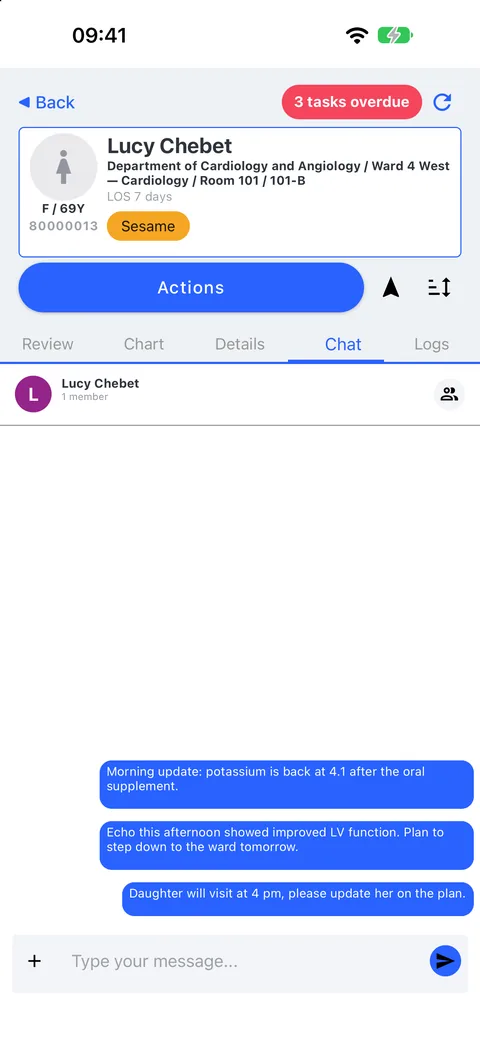
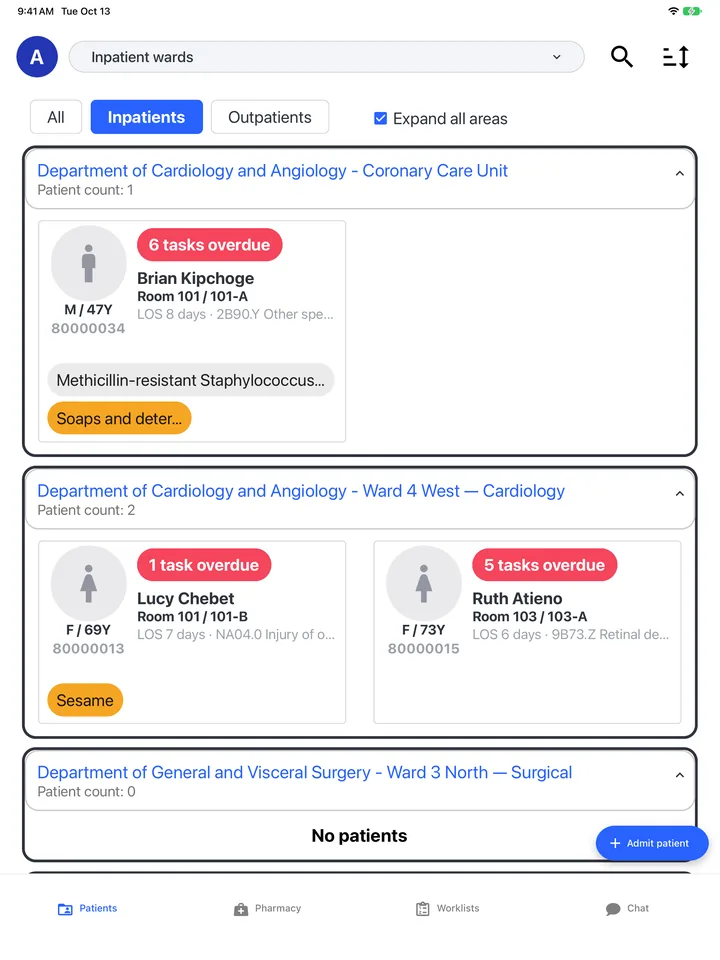
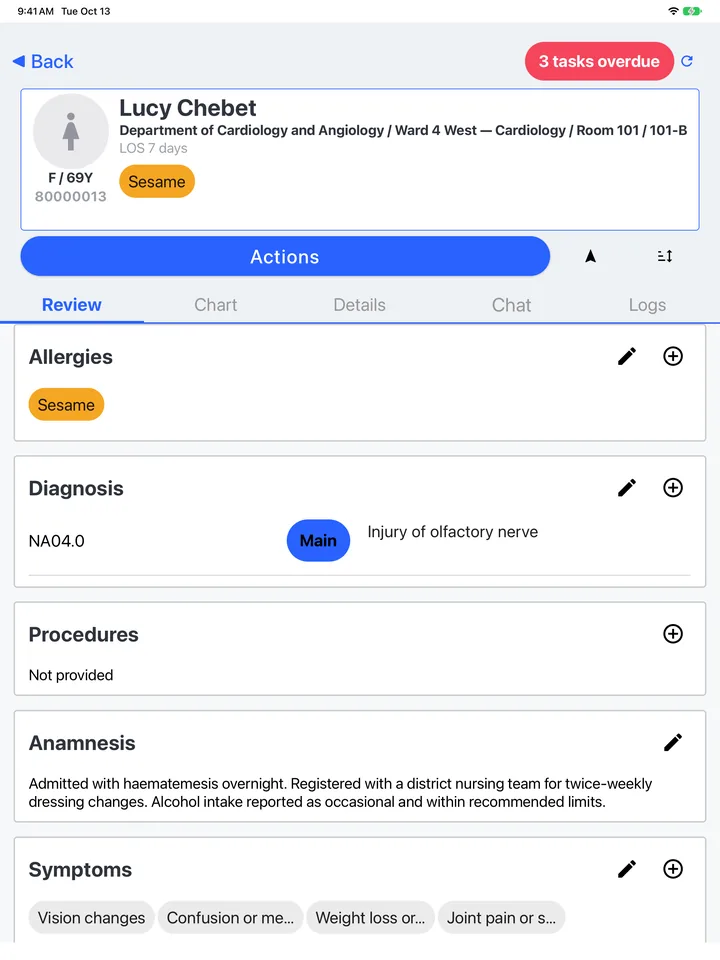
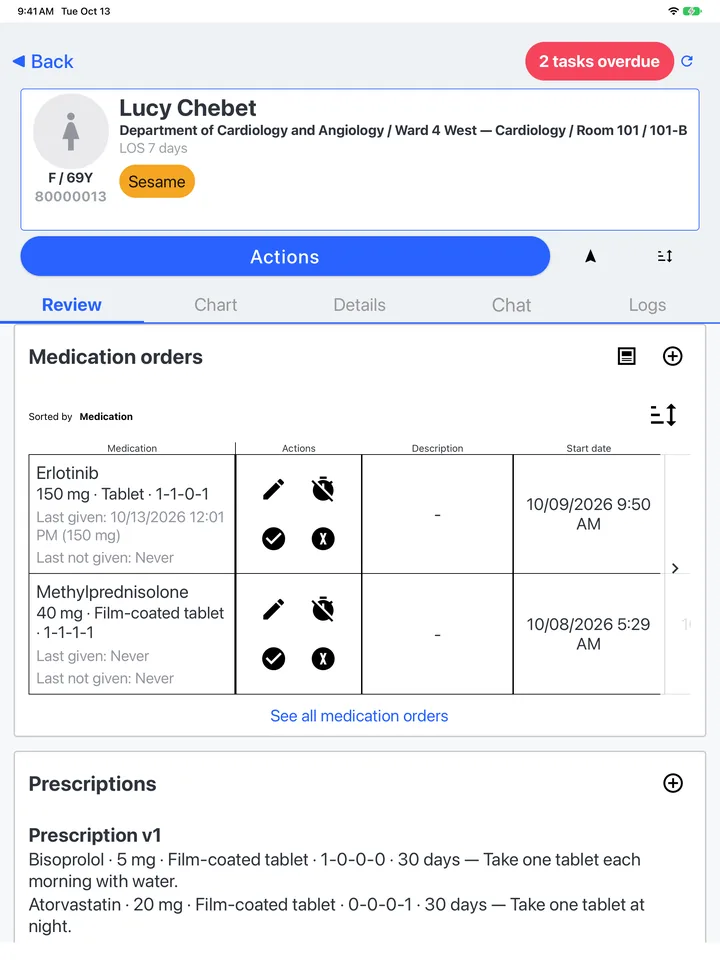
Real screens from the app, on phone and tablet, with fictional data from a demonstration hospital.
Phone
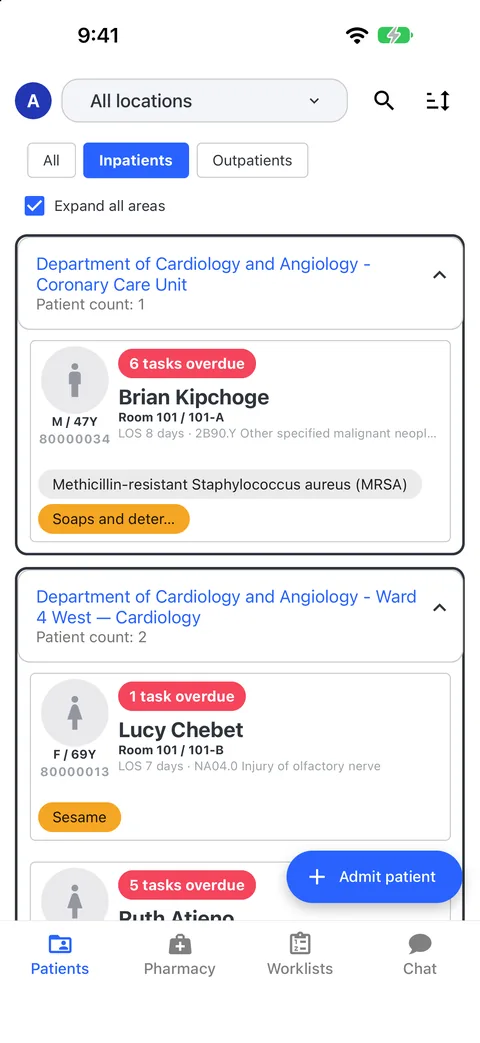
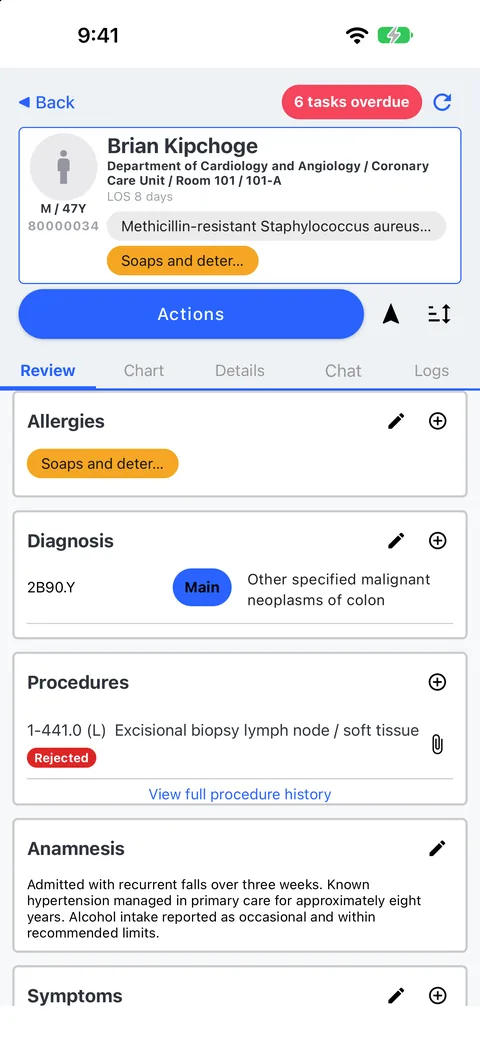
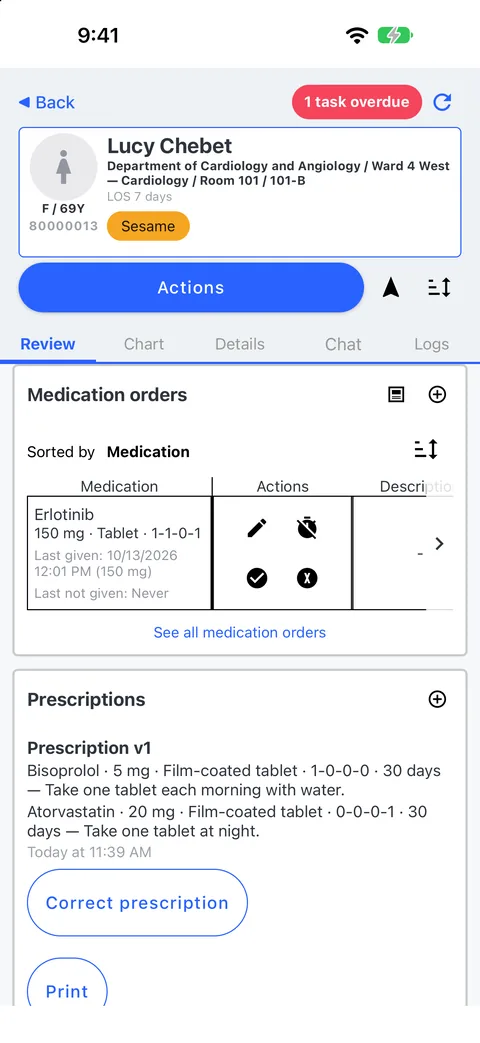
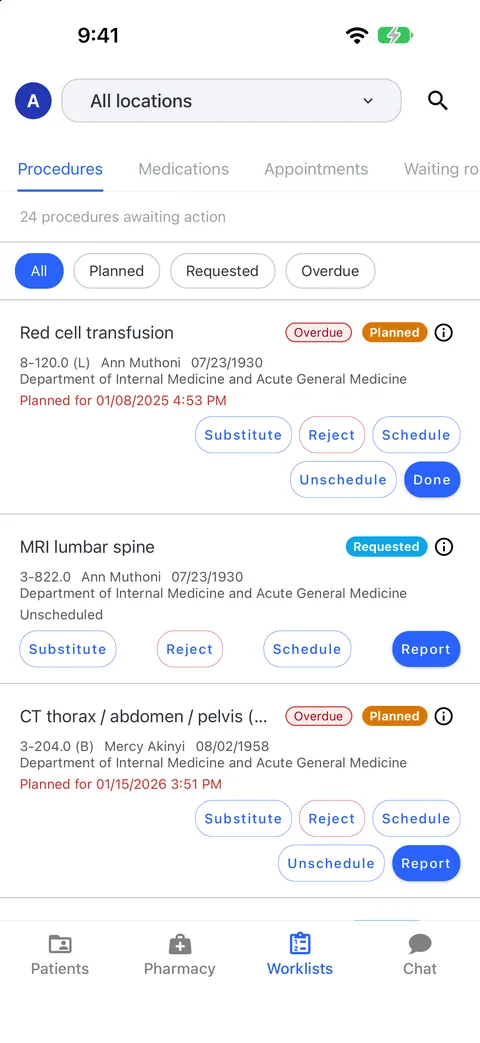
Tablet
Four things that get better on day one
Outcomes
- Full patient history accessible
- Infections, allergies & chronic conditions
Efficiency
- Faster documentation
- All information in real time
Documentation
- Standardized workflows
- Information always in the same place
Collaboration
- Chat in patient context
- Pictures and videos across departments
See Pulsonics in action
A short introduction to how Pulsonics works on the ward.

Prefer YouTube? Open the video on YouTube.
One record, whatever is in your hand
The same patient record, the same data, laid out for the screen it is on. Nurses tend to work from a phone, ward rounds from a tablet, and administration from a browser — nobody has to agree on one device.


Android and the web version are available now; the iOS app is in open beta on TestFlight. See how to start.
A complete record, on a phone
Pulsonics is a full patient record, not a note-taking companion. Infections and allergies stay visible at the top of every screen, so the things that change a decision are never buried.
- Anamnesis, symptoms and clinical notes
- Allergies, infections and risk flags — always in view
- Diagnoses and chronic conditions, coded in ICD-10 or ICD-11
- Vitals and clinical observations over selectable time frames
- Vaccinations and home medication
- Clinical photos and documents attached to the encounter

Chat that stays with the patient
An integrated team chat, deliberately as familiar as the messenger your staff already use — except the conversation sits inside the patient's record instead of on someone's private phone.
- Chat in patient context, one-to-one, or in a group
- Send pictures and videos across departments
- Continuity of care across shift changes
- Nothing leaks into a consumer messenger to get an answer
Patient context
The conversation lives on the patient, so nothing has to be re-explained.
1-on-1 and group
Reach an individual or the whole team caring for that patient.
Photos and video
A wound photo goes into the record, not into a camera roll.
Across the shift
Handover reads back through the thread instead of relying on memory.
Designed for the hardware you can actually buy
Pulsonics assumes the environment it is actually used in, rather than the one a specification sheet imagines.
One record, never two
The record lives in the cloud, not on the phone. Nobody is ever working from a stale copy, and there is nothing to reconcile afterwards.
No patient record on the phone
No persistent patient record is stored on the handset, so a lost or shared phone does not walk out with a ward's worth of patient data. Which matters in a shared clinical environment where phones get handed around.
Affordable hardware
Android smartphones start at around USD 100 per device — your staff's own or hospital-issued; for clinical use we recommend managed hospital devices. Tablets work too, and the iOS app is in open beta on TestFlight.
Ready for your language
Fully supported today: English, Spanish, French, Portuguese, Turkish, Arabic, Russian and Kazakh — and for Arabic the layout mirrors, not just the words. Colleagues in one hospital can each work in their own language: structured documentation is translated, free-text notes stay as written.
Your choice of hosting
On our servers in Germany, in a cloud of your choice — Google, Microsoft, AWS or another provider — or on premises in your own data centre.
Full audit trail
Every view and every change is recorded against the patient, by name and timestamp. Accountability without paperwork.
Local partners
We are building a network of local partners who know your health system: training, first-level support and — where it helps — the devices themselves, bundled with the software. Until a partner is in place in your country, Pulsonics supports you directly.
- Training for clinical and administrative staff
- On-site first-level support in your time zone and language
- Device bundling, so hardware and software arrive together
- Local commercial terms and invoicing

Try it today, on whatever you have
Start in a browser in a couple of minutes, or install the Android app on your staff's phones or hospital-issued devices. The iOS app is in open beta and you can join it through TestFlight.
Signing up takes a few minutes and needs nothing installed on your side. Want a guided tour of a ward round instead? Request a demo.
See Pulsonics on your ward
Tell us about your hospital and we will show you the real workflows — admission, a ward round, the pharmacy view and a discharge.