Following the patient, not the form
Pulsonics is organised around what happens to a patient during a stay. Standardised workflows mean the record looks the same whoever filled it in.
Admission
A new arrival or a returning patient. The first ten minutes decide how useful the rest of the record will be.
- Create a new patient, or find an existing one by name or number
- Unknown patient support for someone who arrives without documents
- Record admission diagnoses, symptoms and anamnesis
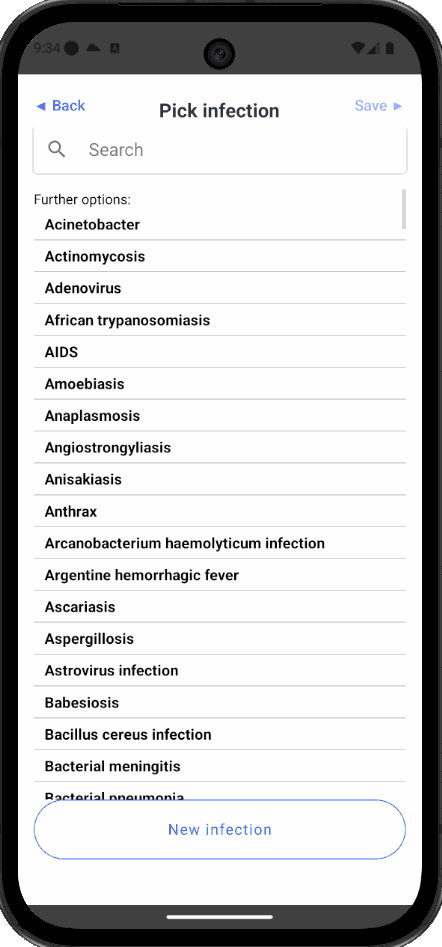
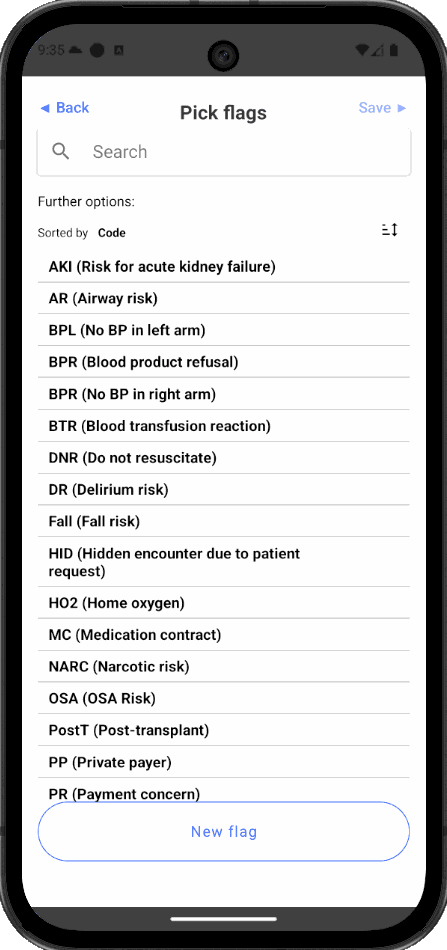
- Set the risk flags that apply
- Capture the medication the patient arrived on
- Record infections and allergies, importing from a previous encounter where one exists
- Assign the patient to a department, ward, room and bed
The ward round and the shift
The bulk of the stay. This is where a mobile EMR either earns its place or gets abandoned.
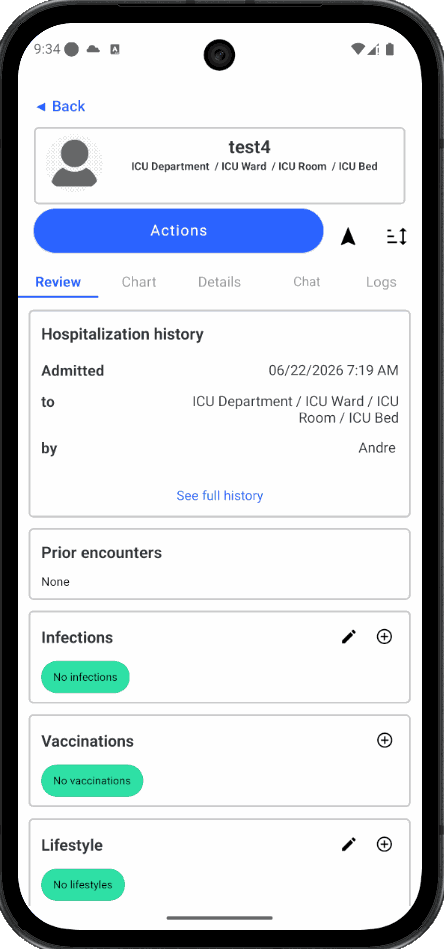
- Open the review screen and see the current picture in one scroll
- Collect vitals and clinical observations at the bedside
- Place clinical and medication orders on the spot
- Add a clinical note, a photo or a document without leaving the patient
- Message a colleague from inside the patient's context
- Reorder the review screen so your specialty's priorities sit at the top
Transfer
Moving a patient between departments is where records usually lose their thread. Pulsonics treats it as an event with its own handover.
- Plan a transfer to another department or ward
- Choose a specific time, or transfer now
- Write transfer notes for the receiving team
- Post-transfer recommendations — what the receiving team should do next
- Plan the medication regime for after the transfer, explicitly
Discharge
The document everyone downstream depends on — the next clinician, the referring doctor, and the patient themselves.
- Regular discharge, self-discharge by the patient, or transfer out
- Record the reason, with a short description where it helps
- Write discharge notes
- Set the discharge medication, starting from what the patient came in on
- Recommend further examinations and diagnostics
- Produce the discharge summary as a document you can hand over
Discharge notes
Written during the stay, not reconstructed at the end of it.
Discharge medication
Starting from what the patient arrived on.
Recommended follow-up
Further examinations and diagnostics to arrange.
A document to hand over
Produced from the record you already kept.
Let's walk it through together
Bring a typical patient journey from your hospital and we will run it in Pulsonics.